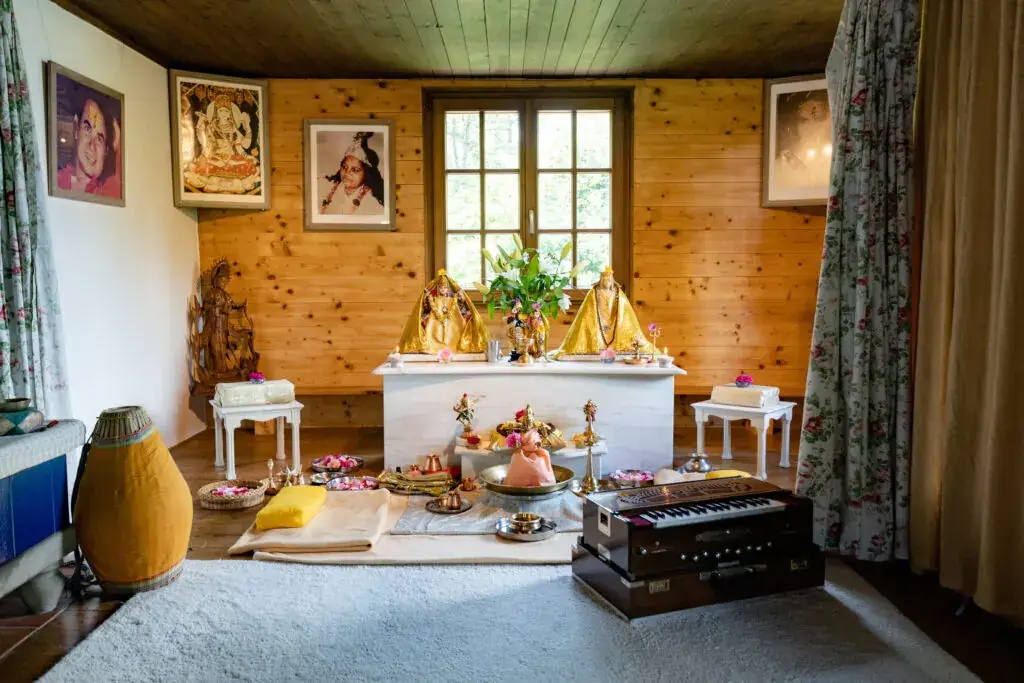
Havan: what is a vedic fire ceremony?
A havan is one of the oldest rituals of the vedic tradition: offerings are given to a fire while mantras are chanted. Here is what lies behind it and how a ceremony unfolds.

Origins
Fire rituals are among the oldest forms of worship in India's vedic tradition. In the Vedas, fire is honoured as Agni — the force that mediates between people and the divine. Havan or homa is the name for the ritual in which offerings are placed into a consecrated fire. It is still performed today at festivals, at life transitions and to purify a space.
How a havan unfolds
- The fire is lit in a fire pit (kund or dhuni)
- Participants sit in a circle around the fire
- A leader chants mantras; with each mantra, offerings are given to the fire
- Typical offerings are ghee (clarified butter), grains, herbs and incense
- At the end, everyone sits in silence by the fire
The exact sequence differs between traditions and places. More important than any detail is the attitude: attention, intention and a willingness to let something go.
What does the ritual mean?
Many people understand a havan as an act of letting go: what you give to the fire is transformed. At the start of a retreat this can help you leave expectations and everyday life behind and arrive with a clear intention. It is not a question of belief — you can also experience the ceremony simply as a shared, quiet moment by the fire.
The fire ceremony at the Schweibenalp
The Schweibenalp has a vedic fire tent, the dhuni. At our November retreat we open the space on Friday evening with a havan. It is optional: the centre charges the group a flat fee plus a donation, which we split among the participants. You tick it when you register.
What to know before you join
- Wear warm clothes that may smell of smoke
- You can always just watch
- If you have breathing problems, sit a little further from the fire
- Photos only if the leader allows it
Frequently asked questions
Is a havan religious?
It comes from the vedic tradition, but you do not need to belong to it to take part — many experience it as a ritual of letting go and gathering yourself.
What is the difference between havan and homa?
Both terms describe the vedic fire ritual; which one is used depends on region and tradition.
Do I need to know the mantras?
No. The leader chants first; you can chant along or simply listen.